We finally boarded the bus to our next destination Toledo two hours away.
Toledo is what many consider one of Spain’s most magnificent cities. It sits atop a large hill over looking Rio Tajo and was denoted a UNESCO heritage site in 1986.
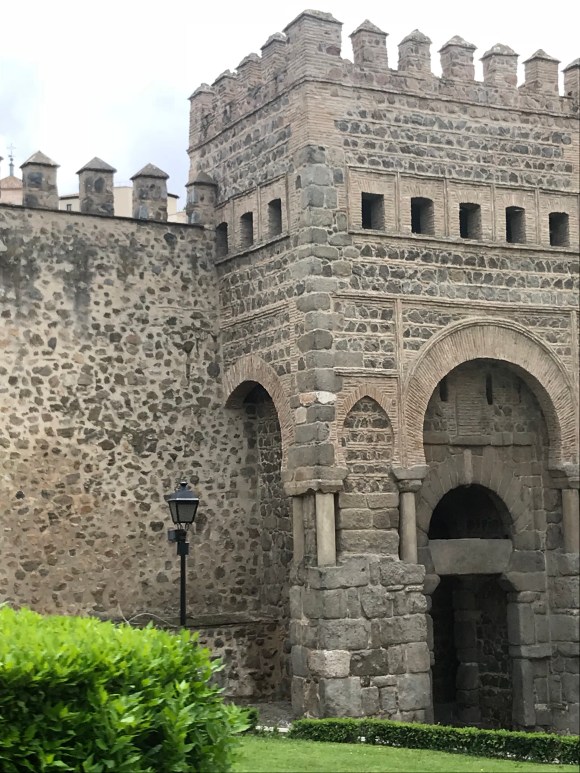
The history of Toledo dates back to Roman occupation and then followed by Muslim rule before becoming the capital of the Spanish empire until the mid-1500s when the royal court moved to Madrid.
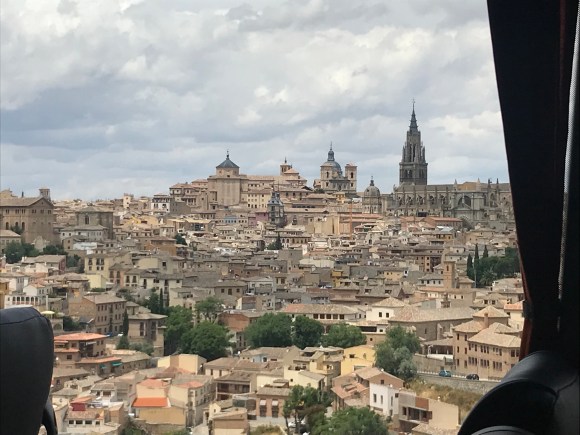
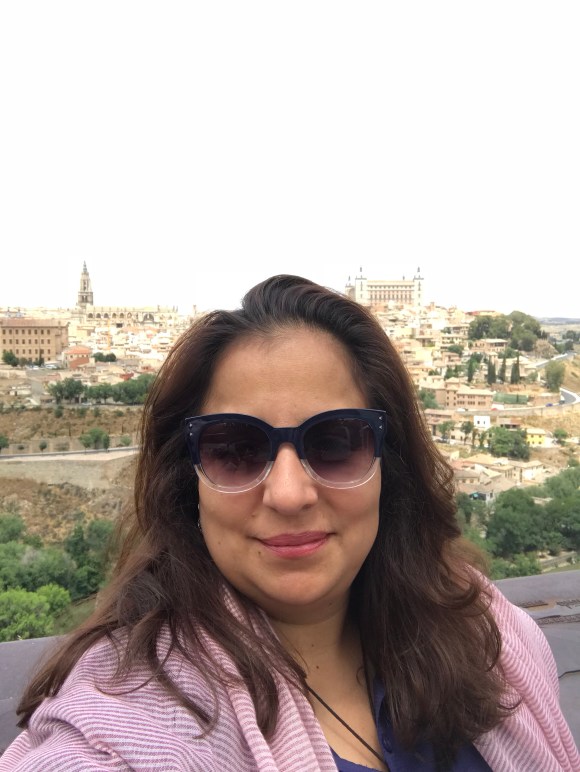
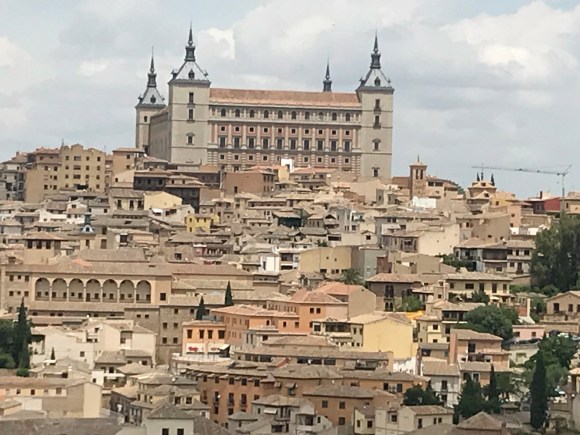
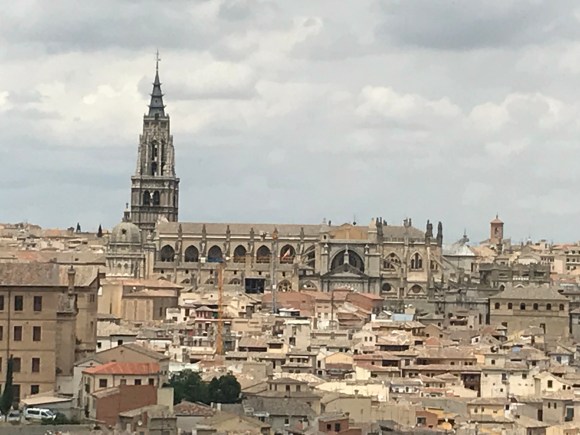
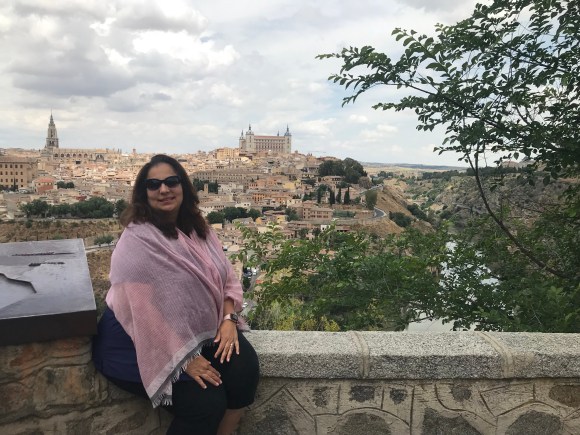
Upon arrival to the city we drove past the San Martin Bridge. You could almost imagine the ancient knights riding their horses over it. We then drove around the perimeter of the city to the “Mirador del Valleto see the wonderful view of the city on top of the hill. The amazing view from across the river included the city, the Alcazar and the towering Cathedral.
The majesty of the city in front of me was amazing once again. I was eager to explore the cobblestone streets and winding paths that held the history of three major world religions. Many of the buildings here have been influenced by the Jewish, Muslim and Christian faith. As you walk around you can see how those influences have been blended together.
Toledo was also made famous by the Master painter El Greco.
Our tour bus dropped us off at the bottom of the city. From down there, we were happy to learn that there were a set of 7 escalators that took visitors up to the city proper. Kudos to Toledo’s forward thinking government that installed this easy access to the city.
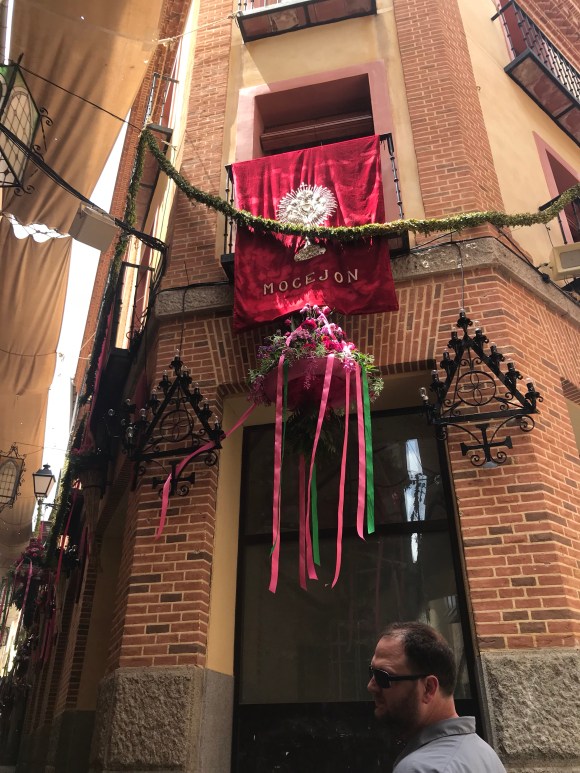
As you come off the set of escalators you can walk about a block to the city center or the Plaza de Zocodover. This is a buzzing center of activity. The main building facing the square is decorated with flags of all the provinces of Spain and all Latin American countries. The day before our visit the city had celebrated their major feast day, the feast of Corpus Christi and all of the regalia and decor was still in the square and around the city streets.
I found it funny that the Main Plaza was once a place where ponies, horses and mares where once traded during Moorish times, and now it has the outdoor cafes sitting for the McDonalds’ and Burger King’s.
Another notable thing about
Plaza de Zocodover is where Auto-da-fé was enacted by the inquisition in the 15th and 16th century.
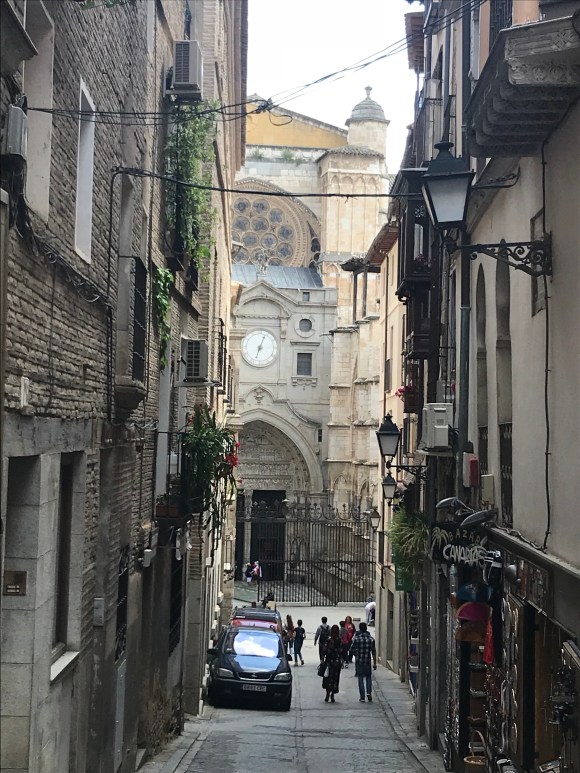
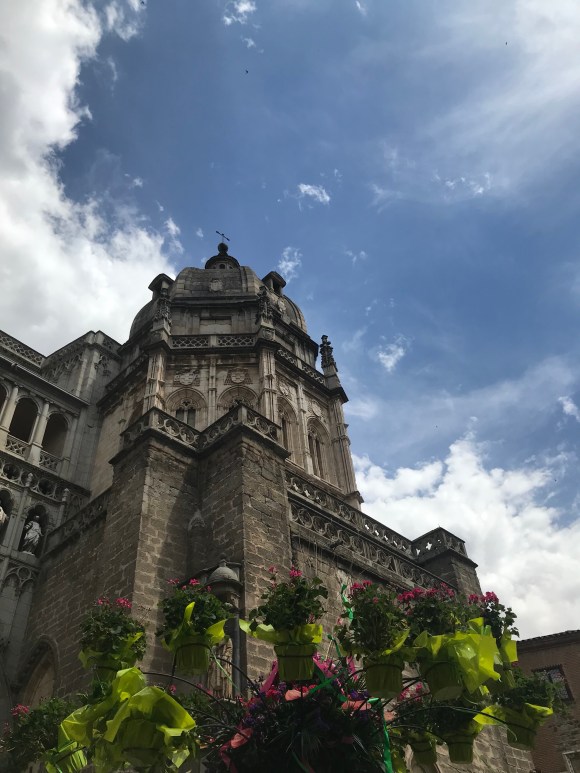
Our walking tour took us through some of the narrow busy city streets. Soon we made our way to the Cathedral. Like many Christian buildings in Toledo and across the country, Toledo’s Cathedral is built on a Mosque (which itself had been built on a 6th-century church!). This is just an example of how the cultures overlap each other and like in Jerusalem, they create a window into history.
Like many Cathedrals, this one took over 250 years to complete. Once inside you can see that it is not as large as it would seem from the outside. One curious fact too is that it is flanked by two towers. Each of the towers bears different architectural designs based on the period of time it was built. Also when facing it, it is believed that since the city is built on a hill the ground beneath the tower on the right would not have been able to withstand the weight of a tower of equal height as the one on the left.
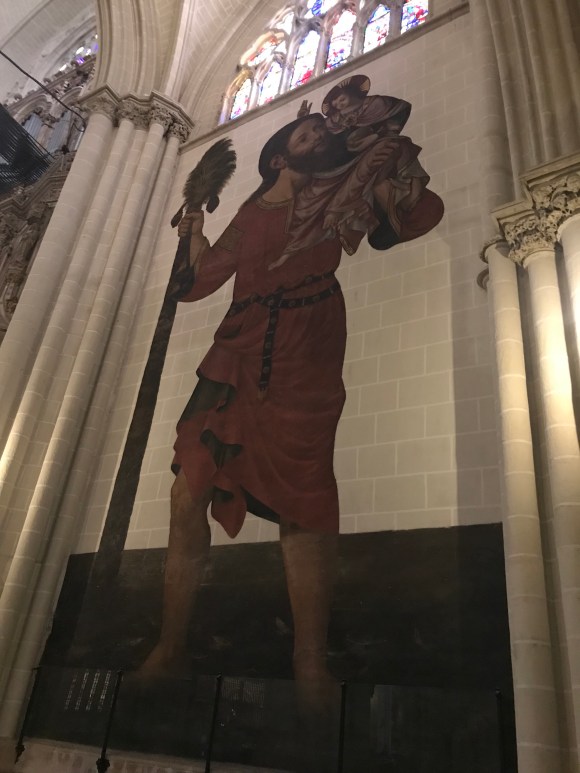
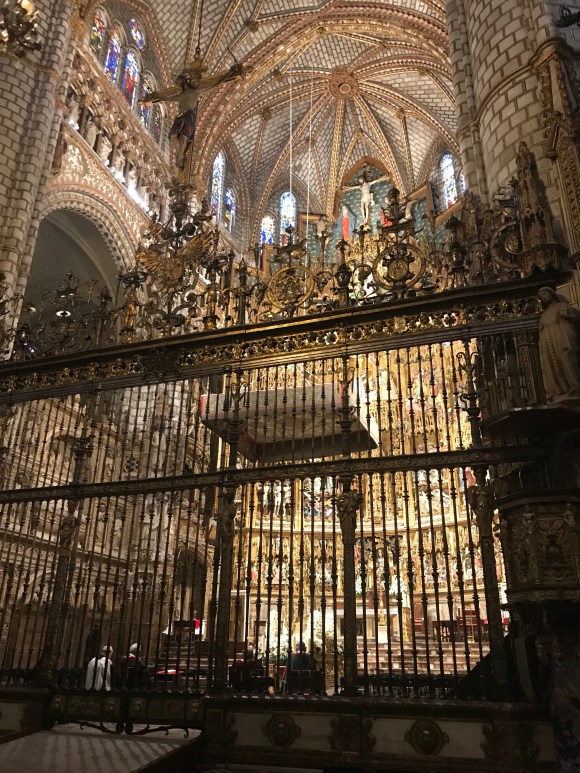
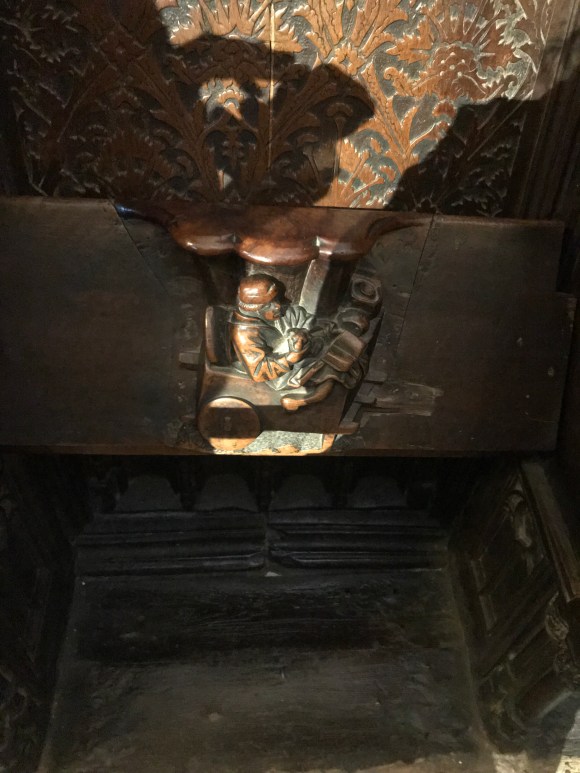
Inside the church you can find several rich works of art and delicate carvings. I think I heard our tour guide explain that the archbishop of Spain makes this church his home. While we were there I saw several clergyman put on their robes and walk out to the altar to pray. Like seeing a famous person in Rodeo drive, the cameras of tourists went crazy like those of the paparazzi as they tried to capture the clergy man sitting in front of the elaborate altar to pray.
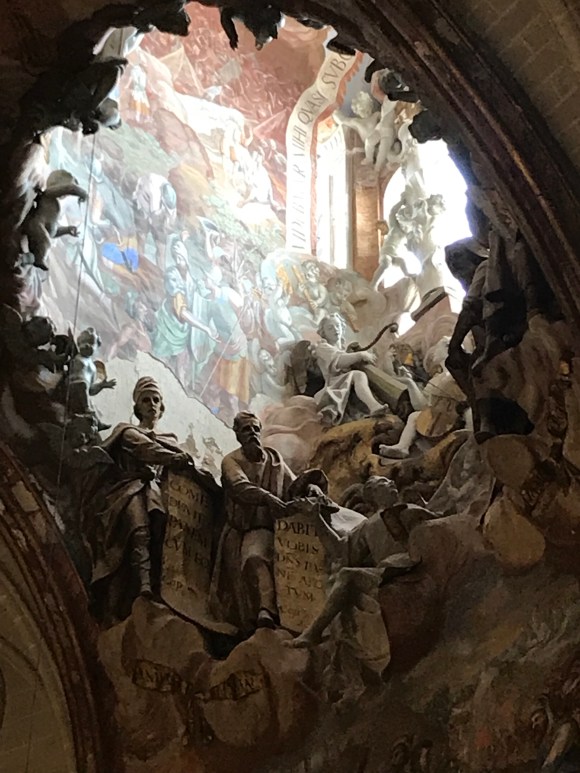
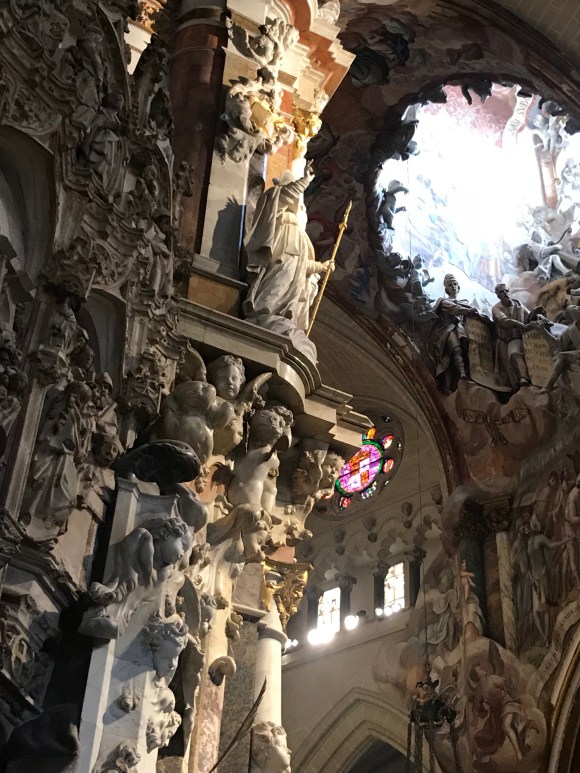
Later on we saw an amazing marble carved sculpture that took up all of the back wall of the Cathedral. It was beautiful and intricate. It depicted Mary’s assumption and Jesus’ life.
In front of this beautiful carving, there was a Archbishop’s hat suspended from the ceiling. It is said that this hat is above a certain archbishop’s grave below. Legend says when the hat falls to the ground it will be a sign that this archbishop has finally made it to heaven. (Apparently this was not a nice guy and residents of Toledo do not think he has made it to the presence of God).
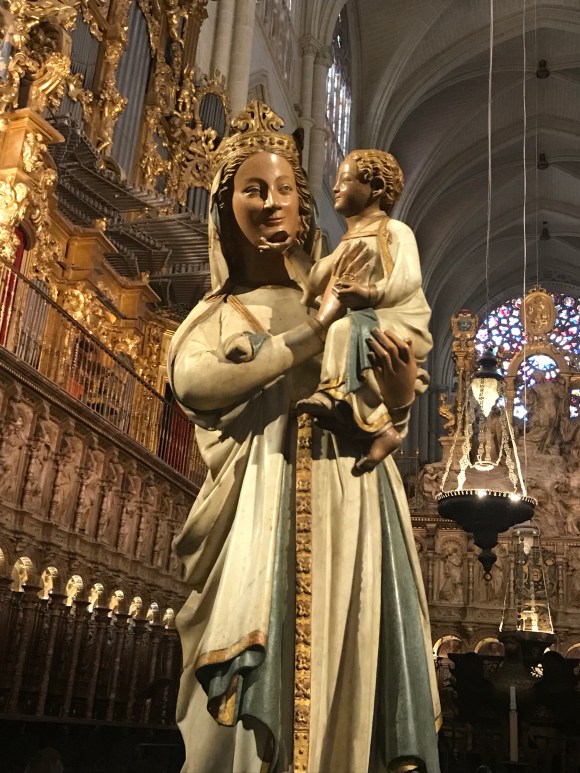
One more notable treasure here is the Statue of the “White Madonna” what is important to note is that this particular depiction of the blessed mother shows her smiling and clothed in white while holding a baby Jesus.
The depiction of Mary is beautiful and moving.
As we made our way outside I was taken back with the thought of the many rich treasures we have seen over the last two weeks in many of these churches.
Often the Catholic Church is critiqued over having such treasures while there may be hungry people in this world.
As I ponder this thought I came to this conclusion. Although at first glimpse it would seem like selling all the treasures could create enough wealth to feed the hungry and poor, this charity would eventually run out.
In my experience with helping those who are less fortunate, we must teach them to fish or eventually the fish provided will run out.
The beauty and extensive wealth of the church is instead housed in these beautiful places to remind us of the history of the faith. Their beliefs and faith inspired countless men and women to create priceless works of art. To this day, it moves people who visit here to act on their faith and become the ones that teach other to fish, to love unconditionally, and provide charity and kindness to those around them.
Perhaps I am naive. Perhaps I just believe that this patrimony really belongs to all of us and the Churches of the world are the ones doing the safekeeping for all of us.
My deep beliefs have also been reaffirmend. History is filled with lessons about men hungry for power and no regard for the humanity of others. Toledo is well known for the ability of three distinct faiths to co-exist and live in harmony. It is possible to achieve this now and I feel compelled to do my part where ever I am planted. I hope other people will heed the lessons of history. Callous powerful men lead to the decline of many great civilizations. It is imperative to standup to injustices. To speak for those who don’t have a voice and most importantly to remember that we are blessed. Always blessed…
As we left Toledo behind I knew that there is a part of me which will always feel at home in Spain. After all this is where my maternal grandmother’s father Francisco came from, and where my maternal grandfather’s mother, Maria Jesus was born.
The culture of Spain reminds me so much of my grandmother Margarita. I have also come to see that this culture influenced my mom a lot while living and studying in Barcelona.
I am excited to note that next year another piece of the Camino awaits me and anyone that would like to journey with me. I am also thrilled that I will get to immerse myself in more of this magnificent culture.










 NY RedRose